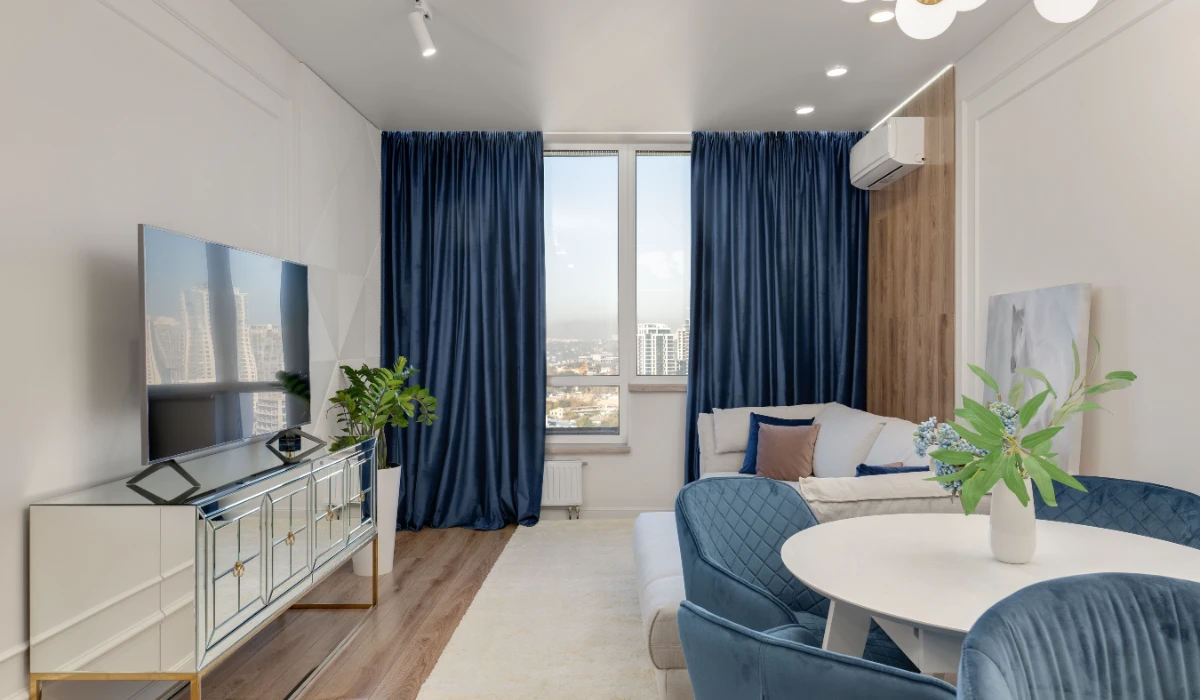
Introduction
Finding the Best furniture layout for small living rooms is not only about fitting a sofa, chair, and table into a tight space. It is about creating a room that feels open, comfortable, and easy to use every day.
A small living room can quickly feel crowded if the furniture is too large, the walkway is blocked, or every piece is pushed against the wall. But with the right layout, even a compact room can feel balanced, stylish, and practical.
The main goal is simple: choose furniture that fits the room, arrange it around a clear focal point, and leave enough space for movement. This guide explains how to plan the Best furniture layout for small living rooms using practical spacing rules, furniture ideas, and layout examples.
Why Furniture Layout Matters in a Small Living Room
In a large room, bad furniture placement may still leave enough space to move around. In a small living room, even a few inches can make a big difference.
The wrong layout can make the room feel tight, messy, and uncomfortable. A sofa that is too deep, a coffee table placed too close, or extra chairs in the wrong corner can disturb the whole flow.
The right layout helps you:
- Create clear walking paths
- Make the room feel visually larger
- Improve seating comfort
- Use storage better
- Make the room suitable for relaxing and guests
This is why choosing the Best furniture layout for small living rooms should always begin with planning, not buying furniture first.
Start by Measuring the Room
Before arranging anything, measure your living room properly. Many small living room problems happen because the furniture size does not match the room size.
Measure the length and width of the room, then note the doors, windows, TV wall, fireplace, built-in shelves, and traffic paths. Also measure your current sofa, chairs, coffee table, rug, and media console.
A simple floor plan helps you avoid buying pieces that look good online but feel too bulky at home.
Important Spacing Rules
| Area | Recommended Space |
|---|---|
| Main walkway | 30–36 inches |
| Sofa to coffee table | 14–18 inches |
| Between seating pieces | 24–36 inches |
| TV distance from sofa | Around 1.5–2.5 times TV size |
| Rug placement | Front legs of furniture on rug |
| Side table height | Close to sofa arm height |
These measurements help create the Best furniture layout for small living rooms because they keep the space functional instead of just decorative.
Choose a Clear Focal Point
Every good living room layout needs a focal point. This is the main feature your furniture faces or gathers around.
A focal point can be:
- TV wall
- Fireplace
- Large window
- Artwork
- Built-in shelves
- Accent wall
Without a focal point, the furniture can feel random. One chair may face the window, the sofa may face the TV, and the coffee table may sit awkwardly in the middle.
When you decide the focal point first, the furniture placement becomes easier. The sofa, chairs, rug, and table all start working together as one seating area.
Don’t Push Everything Against the Walls
Many people think pushing all furniture against the walls makes a small room look bigger. Sometimes it helps, but often it makes the seating area feel disconnected. If the sofa is on one wall and the chairs are far away on another wall, the room may feel empty in the center but crowded around the edges.
For the Best furniture layout for small living rooms, pull the sofa or chairs a few inches away from the wall when possible. This creates depth and makes the room feel more designed. Even a small gap behind the sofa can make the room feel less boxed in.
Pick the Right Sofa Size
The sofa is usually the biggest piece in a living room, so it controls the layout. A large sofa can make a small room feel heavy, while the right sofa can make the space feel comfortable and open.
For small living rooms, choose:
- Slim-arm sofas
- Loveseats
- Apartment-size sofas
- Sofas with raised legs
- Low-profile sofas
- Modular sofas
Avoid oversized rolled arms, very deep seats, and bulky sectionals unless the room shape supports them.
Sofa or Sectional: Which Is Better?
A sofa is usually safer for a small room because it takes less space and works with more layouts. A sectional can work if it fits neatly into a corner and does not block the walkway.
For a narrow room, a slim sofa with one or two chairs is often better. For a square room, a small L-shaped sectional may work well.
Best Layout Ideas for Small Living Rooms
The Best furniture layout for small living rooms depends on the shape of the room. A square room, narrow room, open-plan room, and apartment living room all need different solutions.
Sofa Against the Longest Wall
This is one of the easiest layouts for a small living room. Place the sofa against the longest wall and keep the TV or focal point across from it.
Add a small coffee table or storage ottoman in the center. If space allows, place one accent chair near the corner.
This layout works well when:
- The room is rectangular
- The TV wall is clear
- You need an easy walking path
- You want a simple everyday layout
Keep the coffee table round or oval if the walkway is tight.
Sofa with Two Small Chairs
This layout is great for conversation. Place the sofa on one side and two small chairs across or slightly angled toward it.
A rug can anchor the seating area and make the arrangement feel complete. This layout works especially well when the TV is not the only focus. Use chairs with slim frames or open legs so they do not visually crowd the room.
L-Shaped Layout for Corners
An L-shaped layout works well when you have an empty corner. You can use a small sectional, sofa with chaise, or sofa plus chair to create the L shape. This layout helps define the seating area without using too many pieces. It is useful for apartments and open-plan living rooms.
Just make sure the chaise or sectional does not block the entrance, balcony door, or main walkway.
Floating Sofa Layout
A floating sofa means the sofa is placed away from the wall. This can work in small open-plan rooms where the living area connects to a dining space or kitchen. The back of the sofa can act like a soft divider between zones. Add a narrow console table behind it if space allows.
This layout is useful when you want to separate the living area without adding walls or bulky furniture.
Narrow Living Room Layout
A narrow living room can feel like a hallway if furniture is placed only along the long walls. The goal is to break the tunnel effect. Use a slim sofa along one long wall and place one or two small chairs across at an angle. Choose a round coffee table or nesting tables to keep the center flexible.
Wall-mounted shelves and a floating media console can save floor space. This is one of the smartest ways to create the Best furniture layout for small living rooms that are long and tight.
Small Living Room with TV Layout
For TV viewing, place the sofa directly across from the TV when possible. Keep the TV at eye level when seated.
Avoid placing the TV too high above the fireplace if it causes neck strain. If the fireplace is the main focal point, consider placing the TV on a nearby wall and angling the seating slightly. Use a compact media console or wall-mounted unit to reduce visual weight.
Small Living Room with Fireplace Layout
A fireplace naturally becomes the focal point. Arrange the sofa and chairs so they face or slightly angle toward it. If the room also has a TV, balance both features. You can place the TV beside the fireplace, above a low console, or on a side wall.
The key is to avoid making the room feel split between two competing focal points.
Use Multifunctional Furniture
Small rooms need furniture that works harder. Every piece should have a purpose.
Good multifunctional furniture includes:
- Storage ottoman
- Nesting tables
- Sofa bed
- Bench with storage
- Wall-mounted desk
- Lift-top coffee table
A storage ottoman is especially useful because it can work as a table, footrest, hidden storage, and extra seating.
Choose the Right Coffee Table
A large rectangular coffee table can make a small living room difficult to move through. Instead, choose a table that fits the walking path.
Best options include:
- Round coffee table
- Oval coffee table
- Nesting tables
- Small square table
- Storage ottoman
Round tables are easier to walk around and safer in tight spaces. Nesting tables are useful because you can spread them out when guests visit and tuck them away later.
Use Rugs to Define the Seating Area
A rug makes a small living room feel more organized. It visually connects the sofa, chairs, and table. The biggest mistake is choosing a rug that is too small. A tiny rug floating under the coffee table can make the room look broken.
For the Best furniture layout for small living rooms, choose a rug large enough for at least the front legs of the sofa and chairs to sit on it. This makes the seating area feel connected and intentional.
Maximize Vertical Space
When floor space is limited, use the walls. Vertical storage keeps the room functional without adding too many floor pieces.
Use:
- Floating shelves
- Tall bookcases
- Wall-mounted cabinets
- Wall sconces
- Mounted TV
- High curtain rods
Hanging curtains close to the ceiling makes the room feel taller. Wall-mounted lighting also saves space compared to floor lamps.
Keep Walkways Clear
A small living room should never feel like an obstacle course. The main walking path should stay open from door to door.
Try to leave 30–36 inches for main walkways. If the room is very small, keep at least enough space so people can move without turning sideways. Avoid placing chairs near door swings, large tables in the center, or bulky storage near entry points.
Best Furniture Choices for Small Living Rooms
| Furniture Piece | Best Choice for Small Rooms | Avoid |
| Sofa | Slim-arm sofa, loveseat, raised-leg sofa | Oversized deep sofa |
| Chair | Accent chair, swivel chair, armless chair | Bulky recliner |
| Coffee table | Round table, nesting table, ottoman | Large rectangular table |
| TV unit | Floating console, compact stand | Heavy entertainment center |
| Storage | Tall shelves, hidden storage | Wide bulky cabinets |
| Lighting | Wall sconces, table lamps | Large floor lamps in walkways |
This table helps answer what’s the best furniture layout for a small living room because the right layout depends heavily on choosing correctly scaled furniture.
Pros and Cons
| Layout | Pros | Cons |
| Sofa against wall | Easy, saves space, good for TV | Can feel flat if not styled well |
| Floating sofa | Defines zones, looks designed | Needs enough walking space |
| Sofa + two chairs | Great for conversation | Needs careful chair sizing |
| Small sectional | Cozy and space-efficient | Can block flow if too large |
| Loveseat layout | Good for tiny rooms | Less seating for guests |
| Angled chairs | Improves flow and style | Too many angles can look messy |
Small Living Room Layout Mistakes to Avoid
A small living room often feels crowded because of small layout mistakes, not because the room is impossible to design.
Avoid these common mistakes:
- Buying furniture before measuring
- Using too many small pieces
- Choosing a rug that is too small
- Blocking windows with heavy furniture
- Placing the coffee table too close to the sofa
- Ignoring the main walkway
- Using bulky media units
- Adding too many decorative items
The best layout of living room furniture for small room is usually simple, clean, and practical.
How to Make a Small Living Room Feel Bigger
Furniture layout is important, but visual tricks also help. Light colors, mirrors, natural light, and clean lines can make the room feel more open. Use light wall colors like warm white, cream, beige, soft gray, or pale greige. Choose furniture in neutral tones and add color through pillows, artwork, or decor.
Mirrors can reflect light and create depth. Place a mirror across from a window or near a light source for the best effect.
Infographic: Small Living Room Layout Formula
Best Furniture Layout for Small Living Rooms Formula
Step 1: Measure the room
Room size + doors + windows + walkway
↓
Step 2: Choose a focal point
TV, fireplace, window, artwork, or shelves
↓
Step 3: Select scaled furniture
Slim sofa + small chairs + compact table
↓
Step 4: Keep walkways open
30–36 inches for main movement
↓
Step 5: Anchor with rug
Front legs of sofa and chairs on rug
↓
Step 6: Add vertical storage
Shelves + wall lights + floating console
↓
Step 7: Remove extra clutter
Keep only useful and balanced pieces
Expert Tips for Better Small Living Room Flow
Use one main seating area instead of spreading furniture around the room. This makes the space feel more connected.
Choose furniture with visible legs. Raised-leg furniture shows more floor and makes the room feel lighter.
Use curved pieces where movement is tight. A round coffee table or curved chair can soften corners and improve flow.
Keep the largest piece simple. If the sofa is bulky or heavily patterned, the whole room can feel smaller.
FAQs
What’s the best furniture layout for a small living room?
The best layout usually includes a correctly sized sofa, one or two compact chairs, a small coffee table, and a clear focal point. Keep walkways open and avoid overcrowding the room with extra furniture.
Should furniture go against the wall in a small living room?
Some furniture can go against the wall, but not every piece needs to. Pulling the sofa or chairs slightly away from the wall can create depth and make the room feel more comfortable.
Is a sectional good for a small living room?
A sectional can work if it is properly scaled and does not block traffic. A small L-shaped sectional is best for corners, while a bulky sectional can overwhelm the room.
How much space should be between the sofa and coffee table?
Keep about 14–18 inches between the sofa and coffee table. This gives enough space to walk while keeping the table easy to reach.
How do I arrange furniture in a narrow living room?
Place a slim sofa along one long wall and use small chairs, nesting tables, or a round coffee table. Avoid filling both long walls with bulky furniture because it can make the room feel like a hallway.
What type of sofa is best for a small living room?
A slim-arm sofa, loveseat, apartment-size sofa, or raised-leg sofa works best. These designs provide comfort without taking too much visual or physical space.
How can I add more seating without crowding the room?
Use poufs, small stools, storage ottomans, or lightweight accent chairs. These pieces can be moved easily and used only when needed.
What size rug is best for a small living room?
Choose a rug large enough for the front legs of your sofa and chairs to sit on it. This helps connect the seating area and makes the layout feel complete.
How do I make a small living room look less cluttered?
Use hidden storage, limit decorative items, choose furniture with clean lines, and keep the main walkway clear. A simple layout often looks better than a room filled with too many pieces.
Can I have a TV and fireplace in a small living room?
Yes, but the layout should balance both focal points. Place the TV beside the fireplace, on a nearby wall, or above a low console if the viewing angle feels comfortable.
Conclusion
The Best furniture layout for small living rooms is the one that balances comfort, movement, and visual space. A small room does not need too much furniture; it needs the right furniture in the right position.
Start with measurements, choose a focal point, use scaled furniture, and keep walkways clear. Add a rug to anchor the seating area and use vertical storage to save floor space. When planned carefully, even the smallest living room can feel open, cozy, and practical. The goal is not to fill every corner, but to create a room that works beautifully for daily living.