Introduction
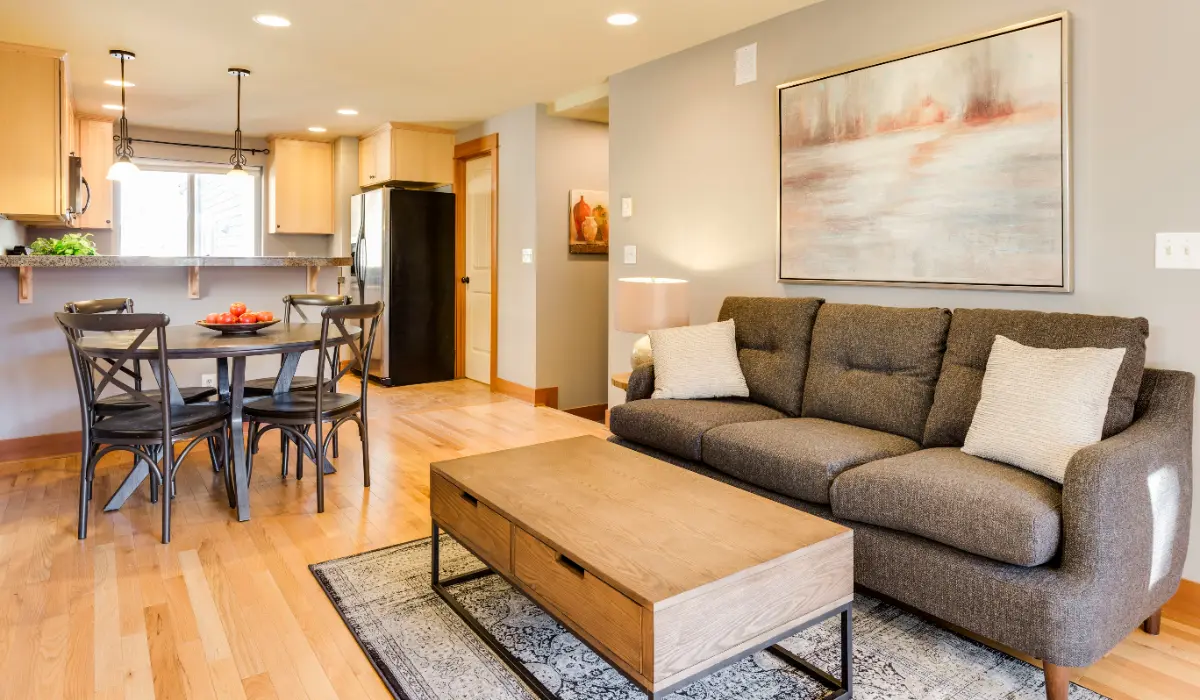
An Essential living room furniture checklist helps you create a space that looks complete, feels comfortable, and works for daily life. The living room is usually the main area for relaxing, watching TV, hosting guests, reading, and spending time with family, so every furniture piece should have a clear purpose.
Many homeowners make the mistake of buying furniture randomly. They choose a sofa first, then add tables, storage, rugs, and decor without thinking about layout, traffic flow, size, or function. A better approach is to follow a practical living room furniture essentials checklist that starts with the main seating and then builds the room layer by layer.
This guide gives you a complete, natural, and useful Essential living room furniture checklist for new homes, apartments, small living rooms, and family spaces.
Why a Living Room Furniture Checklist Matters
A living room is not just a place to put a sofa and TV. It needs seating, surfaces, storage, lighting, comfort, and visual balance. Without planning, the room can feel either empty or overcrowded.
A proper Essential living room furniture checklist helps you decide what to buy first, what can wait, and what may not be necessary for your space. It also saves money because you avoid buying pieces that do not fit your room or lifestyle.
For example, a small apartment may need a slim sofa, nesting tables, and vertical storage. A large family room may need a sectional, ottoman, media console, side tables, and extra chairs.
Measure Your Living Room Before Buying Furniture
Before choosing any furniture, measure the room carefully. This step is often ignored, but it decides whether your furniture will look balanced or awkward.
Measure the full room length and width, door openings, windows, fireplace, TV wall, walkways, and power outlets. Also check how furniture will enter the home because a large sofa may fit inside the room but not through the doorway.
Keep at least 30 to 36 inches of walkway space in main traffic areas. Between the sofa and coffee table, 16 to 18 inches is usually comfortable. These small measurements make a big difference in daily use.
Essential Living Room Furniture Pieces Checklist
The most important furniture pieces are the ones that support comfort, function, and layout. You do not need every item in every home, but this essential living room furniture pieces checklist gives you a smart order to follow.
| Furniture Piece | Priority Level | Main Purpose | Best For |
|---|---|---|---|
| Sofa or sectional | High | Main seating | Every living room |
| Accent chairs | Medium | Extra seating | Guests and conversation |
| Coffee table | High | Central surface | Drinks, books, decor |
| Side tables | Medium | Convenient surface | Lamps, remotes, drinks |
| TV stand or media console | High if using TV | Media storage | TV rooms |
| Storage cabinet or bookshelf | Medium | Organization | Books, decor, clutter |
| Ottoman or bench | Optional | Footrest, seating, storage | Flexible layouts |
| Area rug | High | Anchors furniture | Open and hard floors |
| Lamps | High | Layered lighting | Mood and task lighting |
| Decor accents | Low to medium | Personality | Finished look |
Sofa: The Main Anchor of the Living Room
The sofa is usually the first item in any Essential living room furniture checklist because it controls the layout and style of the room. It is the largest seating piece and often the most used furniture item.
Choose the sofa according to your room size, family needs, and lifestyle. A three-seater sofa works well for most standard living rooms. A sectional is better for large families, open-plan spaces, or people who love movie nights.
For small rooms, avoid bulky arms and deep frames. Choose slim arms, raised legs, and lighter colors to make the room feel open. If you have kids or pets, performance fabric, leather, or washable covers can be a smart choice.
Accent Chairs for Extra Seating and Balance
Accent chairs are not always required, but they add comfort and balance. They are useful when you want extra seating without buying another large sofa. A good accent chair can create a reading corner, support conversation, or fill an empty side of the room. It does not need to match the sofa exactly. In fact, a slightly different texture or color can make the space more interesting.
For a small living room, choose one compact chair. For a larger space, two matching chairs opposite the sofa can create a balanced conversation area.
Coffee Table: The Functional Centerpiece
A coffee table gives the seating area a center point. It holds drinks, books, remotes, trays, candles, and everyday items.
The shape matters. A rectangular coffee table works well with a standard sofa. A round coffee table is better for small rooms, curved furniture, or homes with children because it has no sharp corners. An oval table can soften a room with many straight lines.
Choose a coffee table that is roughly the same height as the sofa seat or slightly lower. It should not block movement between seating pieces.
Side Tables for Everyday Convenience
Side tables are small but very useful. They sit beside sofas and chairs, giving you a place for lamps, drinks, phones, books, or remotes.
In a complete living room furniture essentials checklist, side tables are usually medium priority. If your room is small, one side table may be enough. If you have a large sofa or multiple chairs, two side tables will make the room more practical.
Look for side tables with drawers or shelves if you need extra storage. Nesting tables are also a good option for compact rooms.
TV Stand or Media Console
If your living room has a TV, a media console becomes an important furniture piece. Even if the TV is mounted on the wall, a console helps organize routers, gaming devices, speakers, remotes, and cables.
Choose a TV stand wider than the television for better balance. Closed cabinets are useful if you want a clean look. Open shelves work well if you use gaming consoles or sound systems that need airflow.
A media console should match the scale of the room. A very small console under a large TV can look weak, while an oversized unit can make the room feel heavy.
Storage Furniture for a Clutter-Free Living Room
Storage is one of the biggest content gaps in many living room furniture guides. A room may look beautiful at first, but without storage, clutter builds up quickly.
Storage furniture can include bookshelves, cabinets, credenzas, sideboards, storage ottomans, floating shelves, or built-in units. The best option depends on what you need to store.
Families may need closed storage for toys, blankets, games, and electronics. Book lovers may prefer open shelves. Minimalist homes may use one clean cabinet to hide everything.
Ottoman, Bench, or Pouf
An ottoman is a flexible piece because it can work as a footrest, extra seat, coffee table, or hidden storage. This makes it especially useful in small living rooms. A bench can sit near a window, behind a sofa, or along an empty wall. Poufs are softer and easier to move, making them useful for casual seating.
These pieces are optional, but they can improve comfort and flexibility. If your room already has enough seating and surfaces, you may not need them.
Area Rug to Anchor the Furniture Layout
An area rug is not technically furniture, but it is essential for making the living room feel complete. It connects the sofa, chairs, and tables into one visual zone.
The most common mistake is buying a rug that is too small. Ideally, the front legs of the sofa and chairs should sit on the rug. In a larger room, all furniture legs can sit fully on the rug. A rug also adds warmth, texture, sound control, and comfort. For busy homes, choose durable materials and patterns that hide light stains.
Lighting Furniture: Floor Lamps and Table Lamps
Lighting should not depend only on the ceiling fixture. A comfortable living room needs layered lighting.
Use a floor lamp beside a sofa or reading chair. Add table lamps on side tables for evening warmth. If the room has artwork or shelves, accent lighting can highlight those areas.
Good lighting makes furniture look better and helps the room feel more inviting. This is why lamps deserve a place in an Essential living room furniture checklist.
Decorative Furniture and Finishing Accents
After the main pieces are selected, add finishing touches carefully. These can include wall art, mirrors, plants, trays, vases, baskets, books, candles, and cushions.
Do not overfill every surface. A clean coffee table with one tray, one book stack, and one decorative object can look more expensive than a crowded table. Mirrors are useful in small living rooms because they reflect light and make the room feel larger. Plants add natural softness and make the space feel alive.
Small Living Room Furniture Checklist
A small living room needs smart furniture, not more furniture. Choose pieces that are compact, multi-purpose, and visually light.
For a small space, your checklist should include:
- Slim sofa or loveseat
- Round or nesting coffee table
- One accent chair if space allows
- Wall-mounted shelves
- Storage ottoman
- Narrow media console
- Light-colored rug
- Floor lamp instead of bulky table lamps
Avoid oversized sectionals, heavy dark furniture, and too many side tables. The goal is to keep the room open while still making it comfortable.
Large Living Room Furniture Checklist
A large living room needs zoning. Without enough furniture, it can feel empty and cold.
A large room may need a sectional, two accent chairs, a large coffee table, console table, area rug, media unit, storage cabinet, and multiple lamps. You can also create separate zones, such as a TV area, reading corner, and conversation area.
The key is scale. Small furniture can look lost in a large room, so choose pieces with enough presence.
Pros and Cons of Buying Complete Living Room Sets
Some homeowners buy a complete living room set, while others mix different furniture pieces. Both options can work.
| Option | Pros | Cons |
| Complete furniture set | Easy to match, quick to buy, simple styling | Can look too uniform, less personal |
| Mixed furniture pieces | More character, designer look, flexible style | Requires more planning |
| Custom furniture | Perfect size and fabric options | Usually more expensive |
| Second-hand furniture | Budget-friendly and unique | May need repairs or cleaning |
For most homes, a balanced mix works best. Keep the main pieces timeless and add personality through chairs, tables, rugs, and decor.
Best Order to Buy Living Room Furniture
Buying everything at once can be expensive and stressful. A better method is to furnish in stages.
Start with the sofa because it defines the seating layout. Next, add a coffee table and TV console if needed. After that, bring in side tables, lamps, an area rug, and storage. Finally, add decor, plants, cushions, and artwork.
This order helps you avoid clutter and gives you time to understand how you actually use the room.
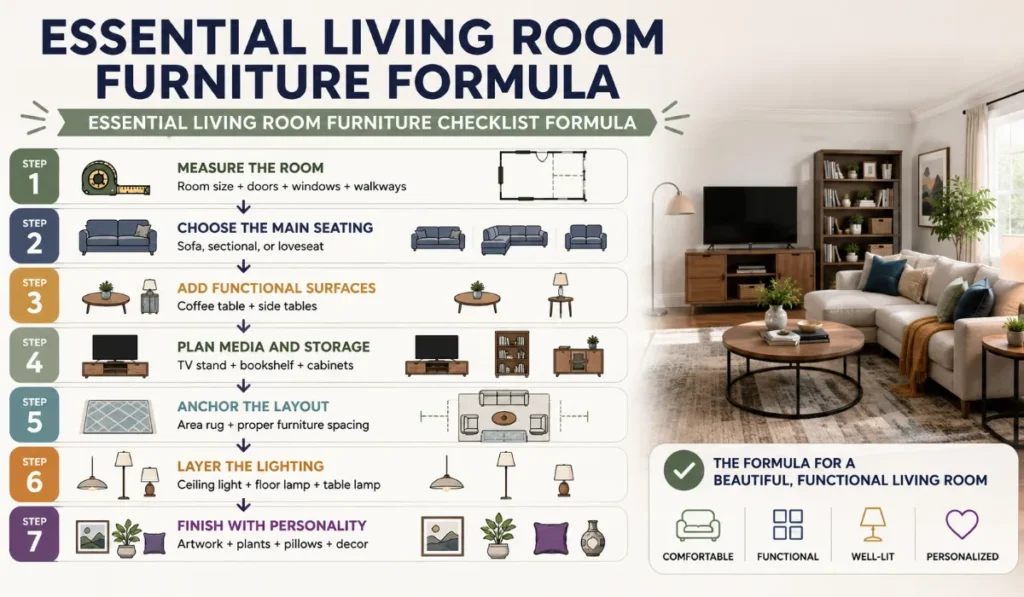
Essential Living Room Furniture Formula
Common Living Room Furniture Mistakes to Avoid
The first mistake is buying furniture without measuring. This can lead to pieces that block doors, crowd walkways, or feel too small.
The second mistake is choosing style over comfort. A sofa may look beautiful online, but if it is uncomfortable, the room will not work.
The third mistake is ignoring storage. Every living room needs a place for small items, even if the design is minimal.
Another common issue is using only overhead lighting. This makes the room feel flat and harsh, especially at night.
How to Choose Furniture Materials
Furniture material affects comfort, durability, cleaning, and style. Fabric sofas feel soft and cozy, while leather is durable and easy to wipe. Wood tables add warmth, while glass tables feel lighter in small rooms.
For busy family homes, choose durable upholstery and stain-resistant surfaces. For formal living rooms, you can use more delicate materials like velvet, marble, or polished wood. The best material is the one that matches your lifestyle, not just your design taste.
Budget-Friendly Living Room Furniture Tips
You do not need to buy every piece at once. Invest first in the sofa, rug, and lighting because these affect comfort and daily use the most. Save money on decor, side tables, baskets, and wall art. These items are easier to replace later.
Second-hand furniture can also be useful, especially for solid wood tables, bookshelves, and cabinets. Just check the condition carefully before buying.
Final Living Room Furniture Essentials Checklist
Here is a simple final checklist you can use before shopping:
| Category | Items to Consider |
| Main seating | Sofa, sectional, loveseat |
| Extra seating | Accent chairs, ottoman, bench |
| Tables | Coffee table, side tables, console table |
| Media | TV stand, media console, cable storage |
| Storage | Bookshelf, cabinet, credenza, baskets |
| Comfort | Area rug, pillows, throw blankets |
| Lighting | Floor lamps, table lamps, ceiling fixture |
| Decor | Artwork, mirror, plants, vases, trays |
This Essential living room furniture checklist keeps the process simple and practical.
FAQs
What furniture is essential in a living room?
The most essential living room furniture includes a sofa, coffee table, side table, TV stand or media console, storage furniture, lamps, and an area rug. Accent chairs, ottomans, and bookshelves can be added depending on room size.
What should I buy first for my living room?
Start with the sofa because it controls the layout and seating plan. After that, buy a coffee table, media console, rug, lighting, and storage pieces.
Do I need a coffee table in my living room?
A coffee table is very useful, but not always required. In small spaces, you can use nesting tables, side tables, or an ottoman instead.
How many seats should a living room have?
A standard living room should seat at least four people if space allows. A sofa with one or two accent chairs is a common setup.
What is the best furniture for a small living room?
The best small living room furniture includes a slim sofa, round coffee table, wall shelves, storage ottoman, narrow TV console, and light-colored rug.
Should all living room furniture match?
No, all furniture does not need to match. A room looks more natural when pieces coordinate through color, scale, material, or style instead of looking like a showroom set.
How do I make my living room look complete?
Use the right furniture layers: seating, tables, storage, rug, lighting, and decor. A room feels complete when each piece has a purpose and the layout feels balanced.
Conclusion
An Essential living room furniture checklist makes decorating easier, smarter, and more organized. Instead of filling the room with random pieces, you can start with the most important furniture and build a comfortable space step by step.
Begin with the sofa, then add tables, storage, media furniture, rug, and lighting. After the functional pieces are in place, finish the room with artwork, plants, pillows, and personal decor.
The best living room is not the one with the most furniture. It is the one where every item supports comfort, movement, storage, and style. By following this Essential living room furniture checklist, you can create a living room that feels complete, practical, and welcoming for everyday life.