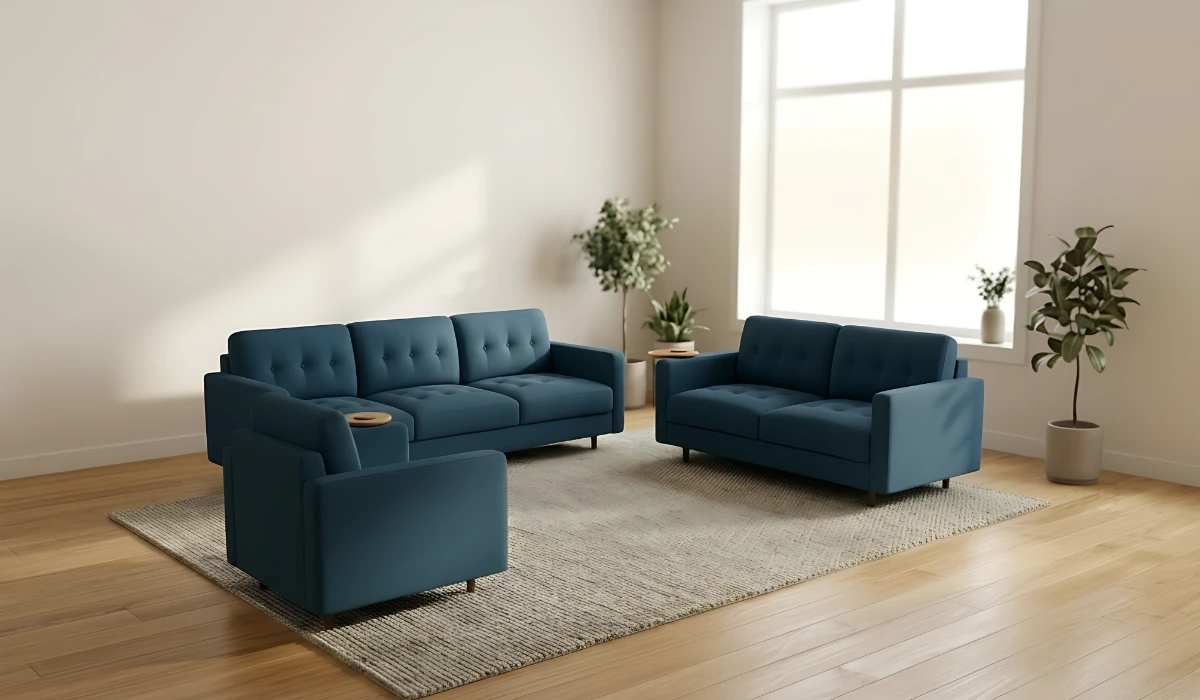
A sofa is often the largest and most important piece of furniture in a living room. It influences comfort, traffic flow, visual balance, and the overall feel of the space. That is why understanding how to choose the right sofa size is more important than simply picking a style or color you like.
Many homeowners make the mistake of choosing a sofa based on appearance alone. However, a sofa that is too large can overwhelm a room, while one that is too small can make the space feel unfinished. Learning how to choose the right size sofa for your room helps create a living area that feels comfortable, functional, and visually balanced.
Why Sofa Size Matters More Than Most People Think
The size of your sofa affects every part of your living room layout. It determines how much walking space remains, where other furniture can be placed, and whether the room feels open or crowded. Even a beautiful sofa can become a problem if its dimensions are not suited to the room.
Choosing the correct sofa size also improves comfort and usability. The right sofa provides enough seating for your family, allows easy movement around the room, and creates a natural focal point without dominating the entire space.
Start by Measuring the Room Correctly
Before shopping, measure the entire room carefully. Record the length, width, and ceiling height. These measurements provide the foundation for choosing a sofa that fits comfortably while leaving room for other furniture and daily movement.
You should also identify windows, doors, fireplaces, built-ins, and other architectural features. A well-sized sofa should work with these elements rather than block them. Proper planning prevents costly mistakes and makes furniture shopping much easier.
Important Measurements to Take Before Buying
Many buyers only measure the wall where the sofa will sit, but there are several measurements that matter. Taking accurate dimensions helps you determine how to choose the right size sofa for a room without relying on guesswork.
Measure the following:
- Total room length and width
- Available wall length
- Distance to windows and doors
- Main traffic pathways
- Ceiling height
- Delivery route dimensions
Do not forget to measure staircases, hallways, elevators, and door openings. A sofa that fits perfectly in the room is useless if it cannot be delivered into the house.
Understand Standard Sofa Dimensions
Understanding standard sofa dimensions makes it easier to compare different options. Most sofas fall within common size ranges, which can help you quickly eliminate pieces that are either too large or too small for your space.
Length is important, but depth and height matter too. A sofa with a deep seat may feel comfortable for lounging but could make a small room feel cramped. Looking at all dimensions together creates a more accurate picture of how the sofa will fit.
Sofa Size Guide by Type
| Sofa Type | Typical Length | Best For |
|---|---|---|
| Loveseat | 52–72 inches | Small spaces |
| Apartment Sofa | 68–80 inches | Apartments and condos |
| Standard Sofa | 78–90 inches | Average living rooms |
| Large Sofa | 90–110 inches | Spacious homes |
| Sectional Sofa | 90+ inches | Open floor plans |
These sizes are general guidelines. The ideal choice depends on your room dimensions, furniture arrangement, and seating needs.
Use the Two-Thirds Rule for Better Proportion
One of the most popular interior design rules is the two-thirds rule. It suggests that a sofa should occupy roughly two-thirds of the wall behind it. This creates visual balance while leaving enough room for side tables, lamps, and decorative elements.
For example, if your wall measures 12 feet long, a sofa around 8 feet long will often look proportionate. This simple guideline can make a significant difference when deciding how to choose the right sofa size for living room layouts.
When the Two-Thirds Rule Does Not Work
The two-thirds rule is helpful, but it is not perfect for every room. Spaces with fireplaces, built-in shelving, multiple windows, or unusual layouts may require a different approach.
In these situations, prioritize functionality over formulas. The sofa should fit naturally within the room while maintaining comfortable circulation and visual balance.
Think About Sofa Depth, Not Just Sofa Length
Many people focus only on sofa length and ignore depth. However, depth often has a bigger impact on how spacious a room feels. A deep sofa can consume valuable floor space and reduce walking areas.
The ideal depth depends on how you use the sofa. If your household enjoys lounging and watching movies, a deeper sofa may be beneficial. For formal spaces, a shallower sofa often creates a cleaner and more refined appearance.
Best Sofa Depth for Different Uses
Different lifestyles require different seating depths. Choosing the right depth improves comfort while helping the sofa fit the room properly.
Common sofa depths include:
- 20–22 inches seat depth for formal seating
- 22–24 inches seat depth for everyday use
- 24–26 inches seat depth for lounging
- 26+ inches seat depth for extra-deep comfort
When deciding how to choose the right size sofa for living room spaces, depth should always be considered alongside length.
Leave Enough Space Around the Sofa
Even the perfect sofa can make a room feel cramped if there is not enough space around it. Proper spacing improves movement, comfort, and overall room functionality.
Interior designers recommend leaving sufficient clearance between furniture pieces. This creates a more open atmosphere and helps the room feel larger than it actually is.
Recommended Sofa Spacing Guidelines
Use these measurements as a starting point when planning your layout:
- Sofa to coffee table: 14–18 inches
- Main walkways: 30–36 inches
- Sofa to side tables: Easy arm reach
- Seating across from each other: 42–120 inches
These guidelines improve both comfort and traffic flow. They are especially useful when learning how to choose the right sofa size for busy family living rooms.
Match Sofa Size with Room Size
Room size should always influence sofa size. A compact apartment requires a different approach than a large open-concept living room. Choosing a sofa based solely on appearance can create proportion problems.
The goal is to achieve balance. The sofa should feel substantial enough to anchor the room while leaving adequate space for movement and additional furniture.
Sofa Size for Small Living Rooms
Small living rooms benefit from space-efficient furniture. Apartment sofas, loveseats, and compact sectionals are often better choices than oversized three-seaters.
Look for these features:
- Slim track arms
- Raised legs
- Lighter upholstery colors
- Compact overall depth
- Multi-functional designs
These characteristics help a sofa feel lighter and less bulky within a limited space.
Sofa Size for Medium Living Rooms
Medium-sized living rooms offer the most flexibility. A standard three-seater sofa often works well because it provides comfortable seating without overwhelming the room.
In most cases, sofas between 78 and 90 inches long fit medium spaces effectively. Pairing them with accent chairs and a properly sized coffee table creates a balanced and welcoming layout.
Sofa Size for Large Living Rooms
Large living rooms can accommodate larger furniture arrangements. A sectional, extra-long sofa, or two facing sofas can help fill the space and create a stronger visual anchor.
However, larger rooms still need proper proportion. Avoid choosing an oversized sofa simply because the room is large. The furniture should work together to create conversation areas and maintain comfortable traffic flow.
Consider Your Lifestyle Before Choosing a Sofa Size
A sofa should fit your lifestyle just as much as it fits your room. A family with children, pets, and frequent guests will have different seating needs than someone furnishing a formal living room used only occasionally.
Think about how the sofa will be used every day. If it is the main spot for movie nights, reading, napping, and entertaining, you may need a larger and deeper sofa than someone who mainly uses the room for conversations.
Questions to Ask Before Buying
Before making a purchase, ask yourself a few practical questions. These answers can help determine the ideal sofa size and configuration for your home.
Consider the following:
- How many people use the sofa daily?
- Do you often entertain guests?
- Do you prefer lounging or upright sitting?
- Will children or pets use the sofa?
- Do you need extra seating for visitors?
The more clearly you understand your needs, the easier it becomes to choose the right sofa size for long-term comfort.
Don’t Ignore Sofa Arm Styles
Most homeowners focus on sofa length and overlook arm styles. However, arm design can significantly affect how much space the sofa occupies.
Large rolled arms may add several inches to each side of the sofa. In small living rooms, those extra inches can make a noticeable difference. Slim track arms often provide more seating space while reducing the overall footprint.
Best Arm Styles for Small Spaces
Some arm styles are more space-efficient than others. If you are working with limited square footage, choosing the right arm design can help maximize usable seating.
Popular options include:
- Slim track arms
- Straight modern arms
- Armless modular sections
- Narrow square arms
These styles create a cleaner appearance while helping the sofa feel less bulky.
How Ceiling Height Affects Sofa Selection
Many sofa guides discuss floor space but ignore ceiling height. The height of your room plays an important role in how large or small a sofa appears.
Rooms with lower ceilings often look better with low-profile sofas. These designs create more visual space above the furniture and make the room feel larger. Taller sofas generally work better in rooms with higher ceilings.
Finding the Right Sofa Height
The goal is to create visual balance between the furniture and the architecture. A sofa that is too tall can overwhelm a room, while one that is too low may feel undersized.
As a general rule:
- Low ceilings: Choose lower-back sofas
- Standard ceilings: Most sofa heights work well
- High ceilings: Taller-back sofas create balance
Matching sofa height to room proportions helps create a more professional-looking design.
Should You Choose a Sectional or a Standard Sofa?
Many people assume sectionals only belong in large rooms. In reality, a sectional can sometimes work better than a traditional sofa and multiple chairs.
A sectional creates a defined seating area and often provides more seating without requiring additional furniture. This can actually make a small room feel more organized and spacious.
When a Sectional Makes Sense
Sectionals are especially useful when you need maximum seating or want to define an open-concept layout.
A sectional is often a good choice if:
- You have an open floor plan
- Your family gathers in one space frequently
- You need extra seating
- You want fewer separate furniture pieces
The key is selecting a sectional that leaves adequate walking space around it.
Common Sofa Sizing Mistakes to Avoid
Even experienced homeowners make mistakes when buying sofas. Most sizing problems occur because people focus on appearance rather than measurements.
Avoiding a few common errors can save money and prevent future frustration. Proper planning often makes the difference between a sofa that works and one that feels wrong.
Biggest Sofa Buying Mistakes
Watch out for these common mistakes:
- Buying before measuring the room
- Ignoring delivery access routes
- Choosing style over function
- Forgetting walkway clearances
- Buying an oversized sectional
- Ignoring sofa depth
- Not considering future needs
Taking a few extra measurements before shopping can prevent most of these issues.
The Relationship Between Rug Size and Sofa Size
A sofa does not exist on its own. Its size should work together with the rug underneath and the surrounding furniture.
Many homeowners choose the correct sofa size but pair it with an undersized rug. This creates an awkward layout and makes the room feel disconnected.
Rug and Sofa Sizing Rules
A properly sized rug helps anchor the seating area. In most cases, at least the front legs of the sofa should sit on the rug.
A good guideline is:
| Sofa Length | Recommended Rug Size |
|---|---|
| 60–72 inches | 5×8 feet |
| 72–84 inches | 8×10 feet |
| 84–96 inches | 9×12 feet |
| 96+ inches | 10×14 feet |
Using the correct rug size helps the entire room feel more cohesive and balanced.
How Color and Shape Affect Perceived Sofa Size
The physical dimensions of a sofa are not the only thing that matters. Color and shape can dramatically change how large or small a sofa appears.
Light-colored sofas tend to feel less visually heavy. Dark-colored sofas often appear larger and more dominant, even when they have the same dimensions.
Visual Tricks That Influence Scale
Certain design details can make a sofa appear larger or smaller than it really is.
Features that make sofas feel lighter include:
- Raised legs
- Light upholstery colors
- Slim arms
- Lower backs
- Open-frame designs
These details are especially useful in apartments and smaller living rooms.
Use Painter’s Tape Before You Buy
One of the simplest yet most effective designer tricks is outlining the sofa footprint on the floor before making a purchase.
This allows you to visualize exactly how much space the sofa will occupy. Measurements on paper are helpful, but seeing the actual footprint often reveals issues you might otherwise miss.
How to Test a Sofa Layout
Use painter’s tape to mark the sofa dimensions directly on the floor. Then walk around the area for a day or two.
Pay attention to:
- Traffic flow
- Coffee table spacing
- Access to windows and doors
- Visual balance
- Seating arrangement
This simple exercise can prevent expensive purchasing mistakes.
Quick Sofa Size Checklist Before Buying
Before finalizing your purchase, go through a quick checklist to ensure the sofa fits both your room and your lifestyle.
Spending a few extra minutes reviewing these points can save years of frustration.
Final Sofa Buying Checklist
✔ Measure room dimensions
✔ Measure doorways and hallways
✔ Follow the two-thirds rule
✔ Leave 30–36 inches for walkways
✔ Consider sofa depth
✔ Match sofa size to room size
✔ Test the footprint with tape
✔ Choose the right arm style
✔ Consider future family needs
✔ Coordinate sofa size with rug size
Pros and Cons of Large vs Small Sofas
| Large Sofas | Small Sofas |
| More seating capacity | Better for compact rooms |
| Great for lounging | Easier to move |
| Creates strong focal point | Lower cost |
| Ideal for families | More flexible layouts |
| Can overwhelm small spaces | Less seating capacity |
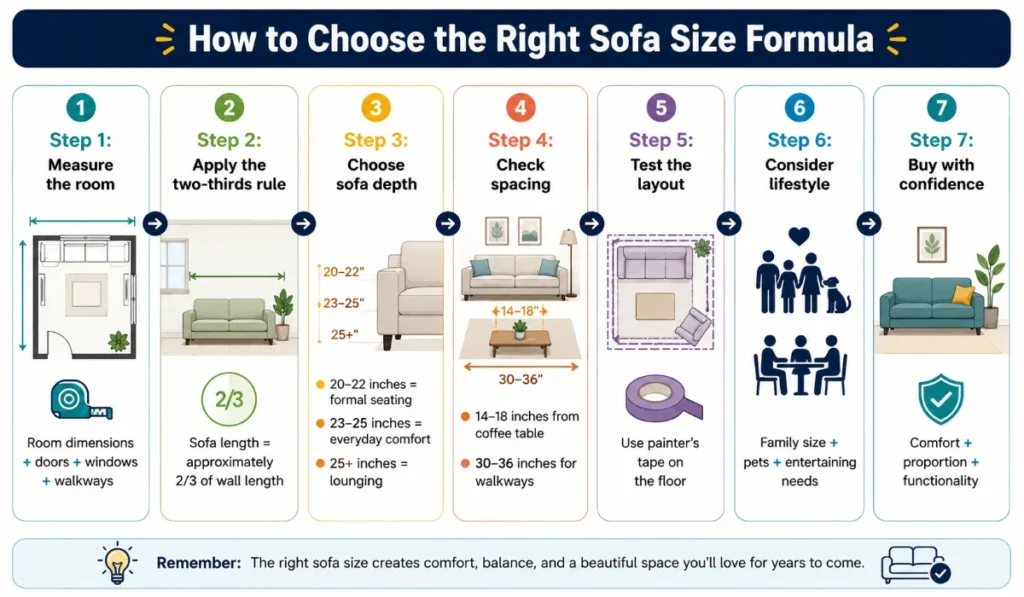
How to Choose the Right Sofa Size Formula
Frequently Asked Questions
What is the ideal sofa size for a small living room?
Most small living rooms work best with sofas between 60 and 78 inches long. Compact designs with slim arms and raised legs help maximize space without making the room feel crowded.
How much space should be between a sofa and a coffee table?
The recommended distance is 14 to 18 inches. This provides enough room for movement while keeping the coffee table within easy reach.
How do I know if my sofa is too big for the room?
If walkways are blocked, furniture feels cramped, or the sofa dominates the room visually, it is likely too large. Maintaining proper spacing is essential for comfort and balance.
Is a sectional better than a regular sofa?
It depends on the room layout and seating needs. Sectionals provide more seating and can define open spaces, while traditional sofas offer greater flexibility for rearranging furniture.
Should a sofa be centered on the wall?
Not always. While centering often creates balance, factors such as windows, fireplaces, built-ins, and room layout may require a different placement.
What sofa depth is best for everyday use?
A seat depth of 22 to 24 inches is generally considered the best balance between comfort and support for most people.
Conclusion
Learning how to choose the right sofa size is about more than finding a piece that fits against a wall. The ideal sofa should complement the room’s dimensions, support your lifestyle, maintain comfortable traffic flow, and create visual balance with surrounding furniture.
Whether you are furnishing a small apartment, a family room, or a spacious open-concept living area, taking accurate measurements and considering proportion will help you make a smarter purchase. By following the guidelines in this sofa size guide, you can confidently choose a sofa that looks great, feels comfortable, and serves your home for years to come.